 Agro
Tomato Late Blight: Symptoms, Treatment and Prevention
AI scanner, farming assistant and agro marketplace in one app.
Late blight is one of the most dangerous tomato diseases. It is caused by the water mold Phytophthora infestans, and in cool, wet weather it can spread through an entire planting within days. The earlier you spot it, the more of your harvest you can save.
How to recognize late blight
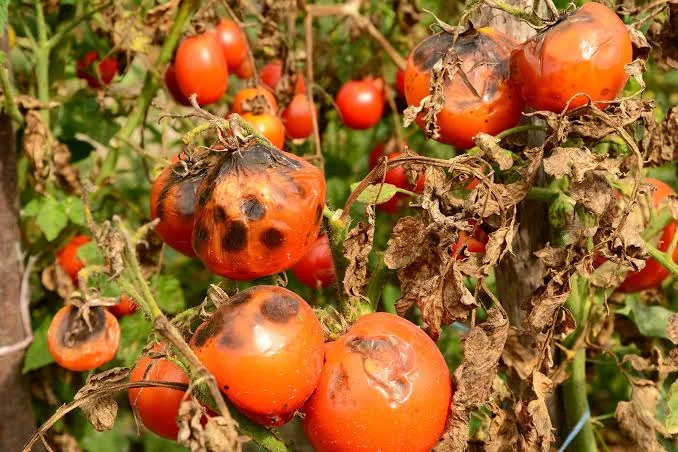
- On leaves: dark brown or blackish, water-soaked, irregular blotches, often starting at the leaf edges.
- Underside of leaves: a white, fuzzy growth in humid weather.
- On stems: dark, elongated lesions; the stem weakens and may begin to rot.
- On fruit: brownish-black, firm, often sunken patches that later turn into rot.
Take a photo with AgroHelper and get a diagnosis hint in seconds.
Conditions that favor the disease
Late blight thrives in cool, humid weather (roughly 10–20°C / 50–68°F), fog, frequent rain and dew, long periods of leaf wetness, and densely planted, poorly ventilated plants. The pathogen spreads on the wind and in rain splash. It can survive the winter in infected potato tubers and plant debris, so tomatoes planted close to potatoes face a higher risk.
Late blight or early blight?
Both cause leaf spots, but they differ:
- Early blight (Alternaria): spots have clear concentric rings, like a target. It usually starts on lower, older leaves and is surrounded by a yellow halo.
- Late blight: blotches are water-soaked and irregular, spread quickly, and a white growth appears on the underside of the leaf in humid weather.
The management approach differs, so a correct diagnosis matters.
Prevention: the most effective step
- Choose varieties with better resistance to late blight.
- Leave enough space between plants and stake them so air circulates well. Remove the lowest leaves.
- Water at the base of the plant in the morning, without wetting the foliage. Drip irrigation works best.
- Use mulch so soil does not splash onto leaves during rain.
- In greenhouses, ventilate often and reduce humidity.
- Rotate crops: avoid planting tomatoes, potatoes, peppers and eggplants in the same spot for several years in a row (typically 3–4 years).
- Clear plant debris in autumn and pull out volunteer potatoes.
- Inspect your plants closely after humid or rainy weather.
What to do with infected plants
- Remove affected leaves and plants quickly and destroy them (burn them or bag them for disposal). Do not compost them.
- Most fungicides are protective and cannot repair tissue that is already damaged, so treatment works best at the first sign of disease or before risky weather. Copper-based products (such as Bordeaux mixture) and other registered fungicides are widely used.
- Always check the product label for dosage, spray interval and the waiting period before harvest. Consult a local agronomist when in doubt.
- Once the disease has taken over the whole planting, saving the plants is often not possible. The priority then is to stop it spreading to neighboring plants.
How AgroHelper can help
If you are not sure whether it is late blight or another disease, take a photo of the affected leaf with the AgroHelper AI scanner. The app helps identify plant diseases, and the farming assistant offers practical advice. Treat the result as guidance, and ask an agronomist when the damage is serious.
Download AgroHelper: AI diagnostics, a personal farming assistant and daily agro news.
This article is for general information. Always follow the product label for dosage and use, or consult a local agronomist.